How a Texas Hill Country Wine Tour Actually Works
Most people booking their first Hill Country wine tour are picturing something that doesn't exist: a bus with a schedule, a guide with a clipboard, and a fixed list of wineries you get marched through on somebody else's clock. That's a tour. What almost every Austin group actually books is a different thing entirely, and the difference explains nearly every question we get on the phone — do we need reservations, how many wineries can we fit, what does a tasting cost, who picks the route. Here's how a Hill Country wine day really works, start to finish.
You're Renting the Bus, Not a Seat on a Tour
This is the part that reframes everything else. You're not buying a ticket on a scheduled tour alongside strangers. You're renting the entire vehicle and the hours that come with it, and the day inside those hours is yours to build. The clock starts when the driver picks you up and stops when you get dropped off. Where you go in between is your call. That means there's no itinerary you're locked into. Want to spend two hours at one winery because the patio is perfect and nobody wants to leave? Do it. Want to squeeze in a fourth stop? Tell the driver. Decide at winery number two that you'd rather go to a distillery instead? That works too. Groups change the plan mid-day constantly, and it's not a problem — it's the entire point of renting the bus. The flip side: if nobody plans anything, nothing gets planned. Which brings us to the second path.
Read Also:
Best Way to Explore Hill Country8 Things to Know Before You Book
You can plan the route, or hand it off entirely
Two options, both normal. Build your own list of wineries and hand it to the driver, or tell us the vibe you're going for and we'll put the route together and make the reservations. Most groups build their own. Plenty of groups would rather not think about it, and that's a completely standard request.
Tastings are optional — all of them
This surprises people. You do not have to do a formal tasting at every stop, or at any stop. Plenty of groups skip formal tastings entirely and just order glasses off the menu, sit on the patio, and enjoy the afternoon. Most groups do one or two formal tastings and keep the rest casual.
You only need a reservation for a formal tasting
If you're walking in to look around, buy a bottle, or order a glass, you don't need to book anything. Walk in. The reservation only matters when you want the seated, guided, five-or-six-pour experience — that's the one wineries need a headcount for.
There are two ways to handle those reservations
Book the tasting yourself and pay the winery directly, which means you can taste absolutely anywhere you want. Or pre-pay through us when you book the bus, at $28 per person per tasting, and we'll make the arrangements for you. Pre-paying is simpler; booking it yourself is more flexible. Groups do both, sometimes on the same day.
Pre-paid tastings happen at our preferred wineries
That's the one limitation, and it only applies to pre-paid tastings. In Fredericksburg, those are Baron's Creek, Texas Wine Collective, and Slate Theory. In Driftwood and Dripping Springs, they're Driftwood Estate, Wimberley Valley Winery, and Fall Creek Vineyards. Those are the places we have working relationships with. Anywhere else in the Hill Country is still completely fair game — you'd just book that tasting yourself and we'll drive you there.
Three to four wineries is the realistic number
People routinely plan six and come back having done three. Between the drive out, the drive between stops, and the fact that nobody wants to be rushed off a patio in good weather, three or four is where most groups land and feel good about it. Plan four, be happy with three.
Budget more hours than you think
Driftwood and Dripping Springs trips run a five-to-six-hour minimum and most groups go six to eight. Fredericksburg runs a seven-hour minimum and most groups go eight to ten, because you're adding real highway time in both directions. These aren't upsells — they're how long the day actually takes once you're out there.
The bus is part of the day, not just the transport
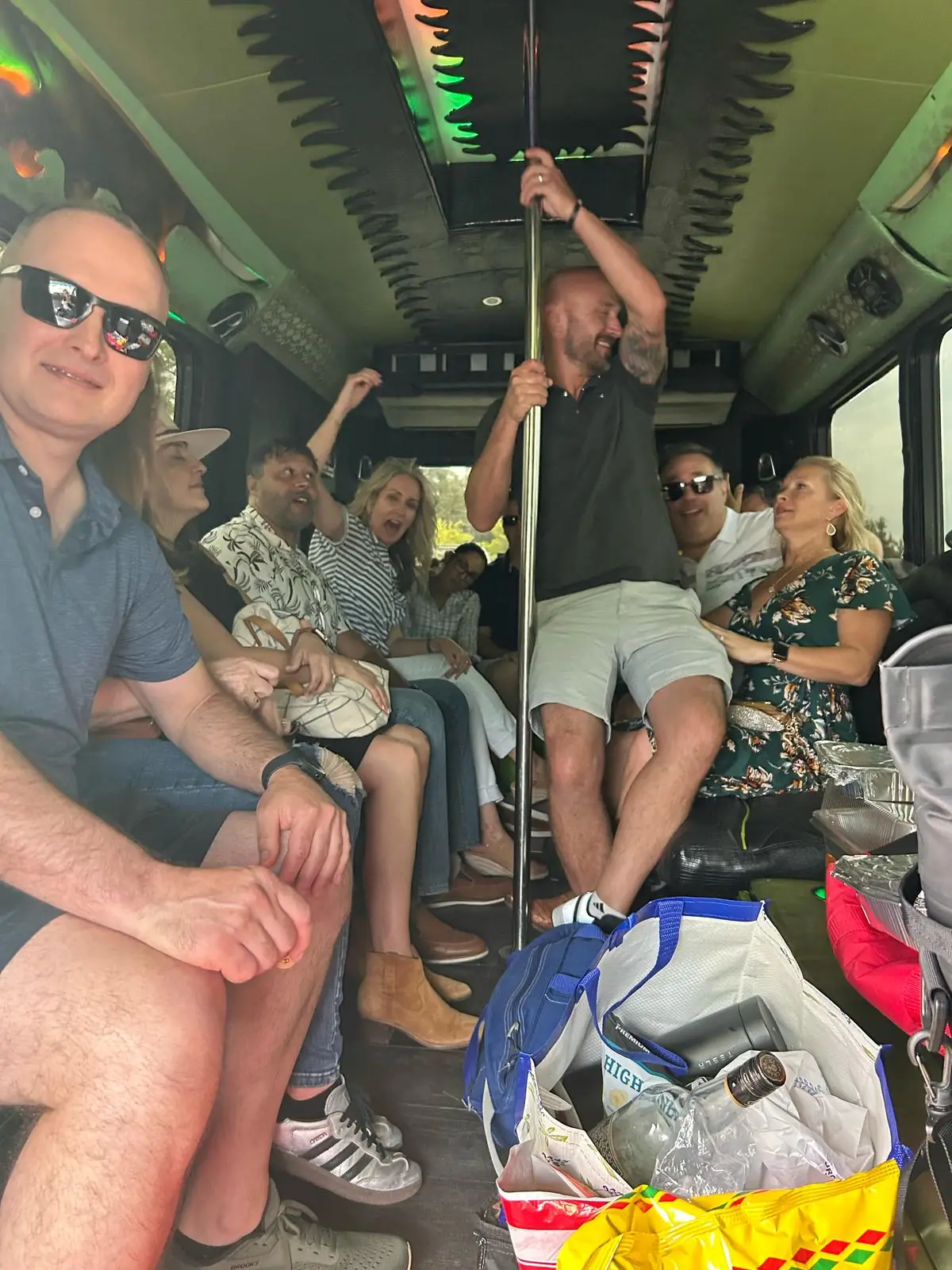
Coolers with ice, bottled water, cups, a sound system, and BYOB the entire way. The drive out to Fredericksburg is over an hour, and the ride home after a day of tasting is usually where the trip's best stories come from. Groups who treat the bus as dead time are missing a third of what they paid for.
Read Also:
Best Wine Tours in Austin, TXFredericksburg or Driftwood? Pick Your Region First
Almost every other decision follows from this one, and the two regions give you genuinely different days. Driftwood and Dripping Springs sit about 45 minutes from Austin. Less highway, more time on the ground, and the scenery is classic Hill Country — oaks, limestone, long views. It's the better pick for a shorter day, a first wine tour, or a group that wants to be home at a reasonable hour. Salt Lick BBQ is right there too, which has rescued more than one afternoon. Fredericksburg is the full wine-country experience: more wineries, bigger estates, and a historic Main Street worth walking if you build in the time. It's a longer commitment — the drive alone is most of two hours round trip — but it's the one people mean when they say "Texas wine country." Go on a weekday if you can; Fredericksburg on a Saturday in good weather is busy. If you can't decide, the honest answer is that first-timers tend to be happier with Driftwood and repeat groups graduate to Fredericksburg.
What's Included When You Book
Every wine tour comes with a professional driver, round-trip transportation from anywhere in Austin, built-in coolers with ice, bottled water and cups, a Bluetooth sound system, LED party lights, and BYOB welcome for the ride. The fleet runs from a 10-passenger party van up to 16, 20, and 24-passenger party buses, so the whole group travels together instead of caravanning. Winery tasting fees are separate — that's the $28 per person per tasting if you pre-pay through us, or whatever the winery charges if you book direct. Bottles, food, and anything else you buy on site are yours. Transportation is priced for the entire bus rather than per person, so larger groups pay less per head, and rates depend on bus size, day of the week, and how long you're out. Weekdays cost less than weekends. Call (512) 968-3660 for a current quote. Book earlier than feels necessary — fall is peak season in the Hill Country, and Saturdays go first by a wide margin.
Read Also:
Bachelorette Wine Tour IdeasPick a Region. Pick a Date. We Handle the Rest.
Nobody's first wine tour goes perfectly according to plan, and it doesn't need to. The route can change, the tastings are optional, and the only real decisions you have to make up front are the region, the date, and roughly how long you want to be out. Everything else gets sorted on the day.
Plan Your Hill Country Wine TourTop Questions, Answered
Do you need reservations for Texas Hill Country wine tastings?
How many wineries can you visit in one day?
How much does a wine tasting cost in the Hill Country?
How long does a Hill Country wine tour take?
Can we choose our own wineries, or is the route fixed?
Should we go to Fredericksburg or Driftwood for wine tasting?
Related Pages
Recent Posts
Ready to Book Your Party Bus?
Let Austin Party Bus make your next celebration unforgettable.